Project Overview
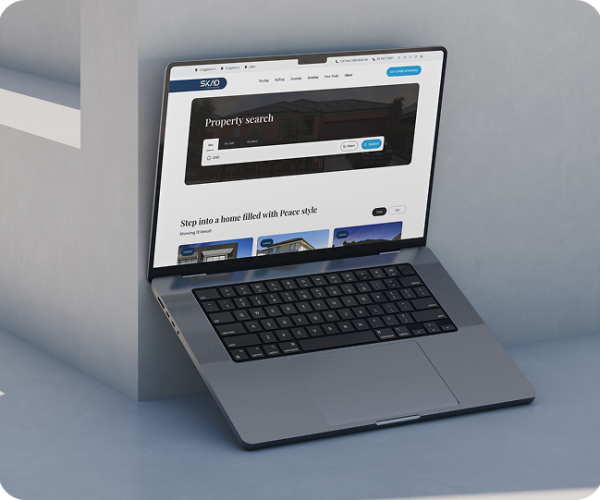
SKAD Real Estate is a family owned Victorian agency specializing in residential sales, rentals, and property management. With a strong presence in Melbourne’s Northern and Western suburbs, they focus on delivering personalized, technology-driven results based on skill and dedication.
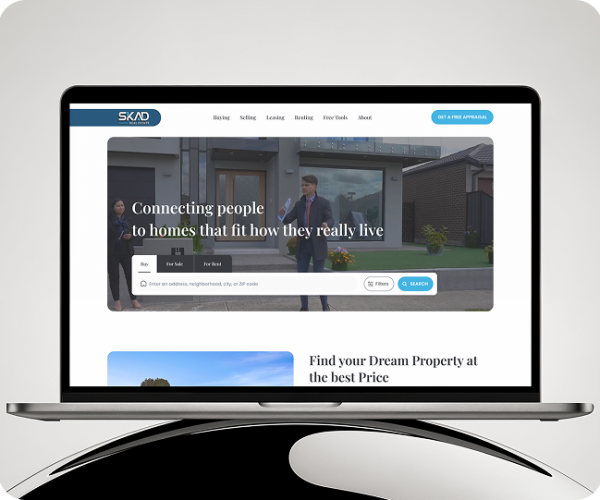
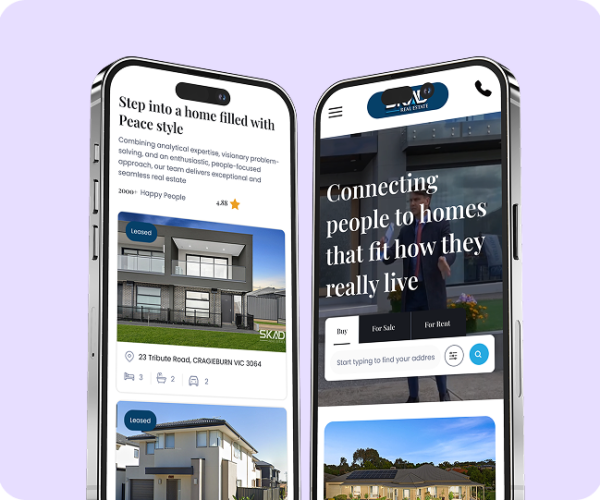
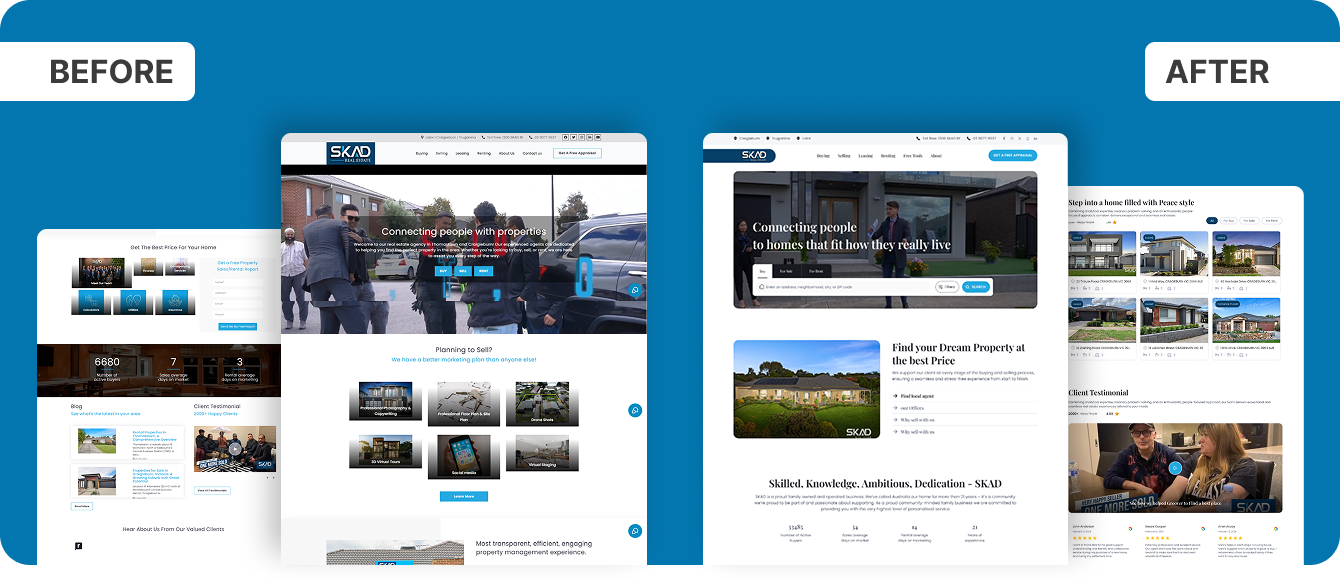
My goal was to transform the platform into a modern, mobile-first, conversion-driven real estate experience.
TEAM
End-to-end UX/UI (Me)
Project Manager
Content Writer
2 Engineers
Graphic Designer
TIME LINE
3.5 Month
The Core Challenge
SKAD Real Estate approached me with a critical challenge
their website lacked trust, was not mobile-friendly, and had
high bounce rates.
Solution
My goal was to transform their outdated digital presence into
a modern, conversion-focused platform that builds credibility
and increases inquiries
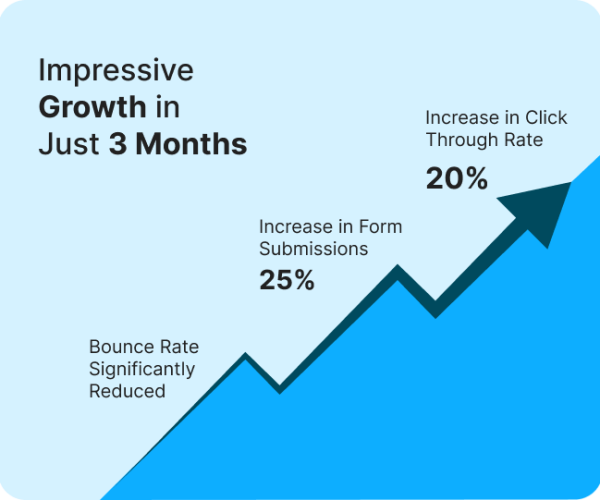
Reduce bounce rate
Mobile Friendly Website
CTA Placement
Improve trust perception
Increase inquiry rate
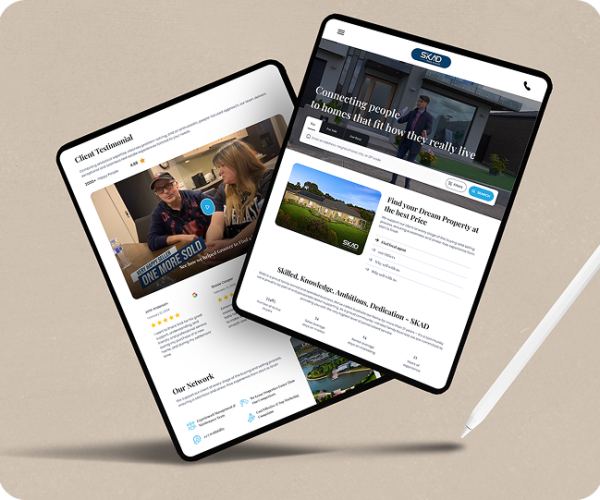
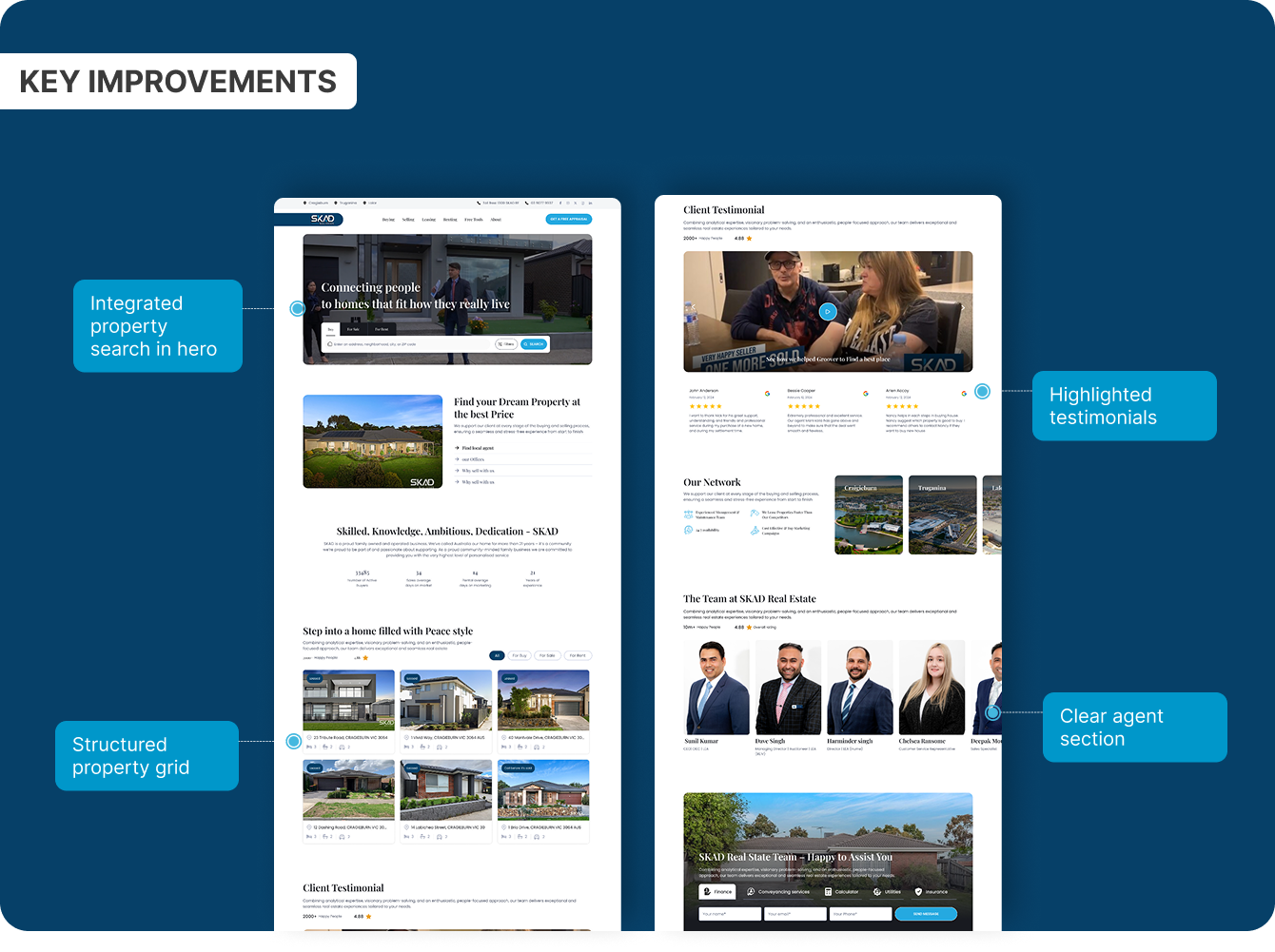
Highlight agents
Lets Start The Interesting Journey
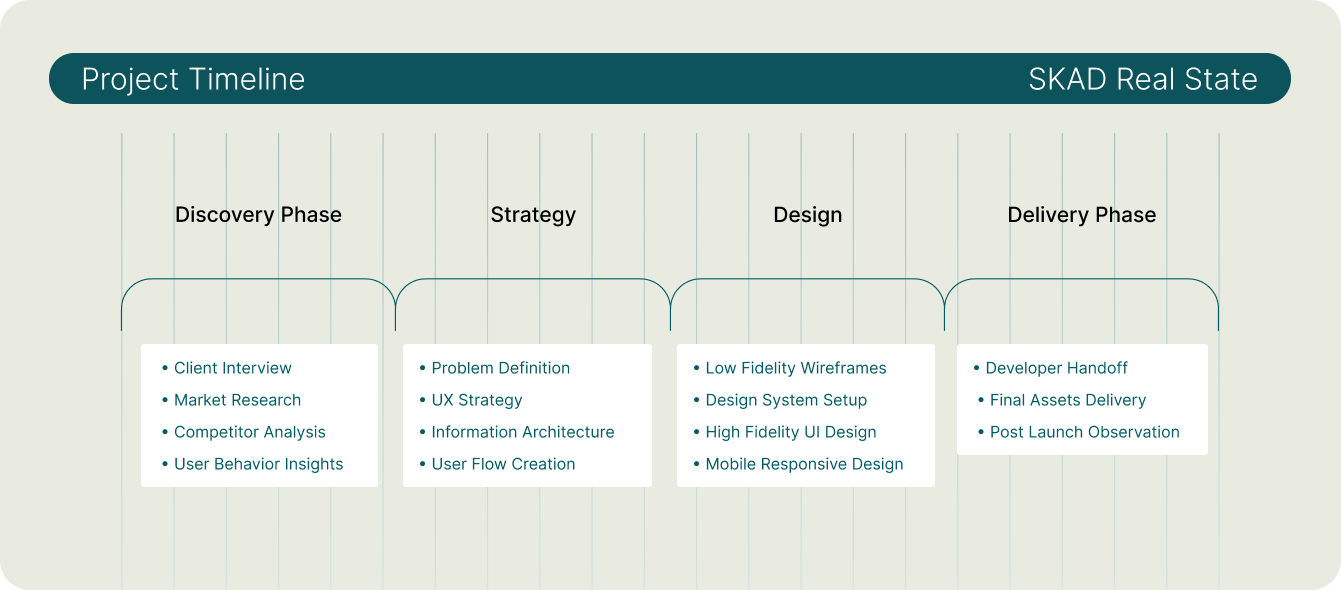
How I Achieve this Goal
Research & Insights
1. Market Analysis
Before starting the redesign, I first studied how other successful real estate websites in Australia are designed. The goal was to understand what works well in this industry and what users usually expect when they visit a property website.
During this research, I focused on a few key areas
- How property search is presented on the homepage
- Where important buttons like Contact Agent or Book Appraisal are placed
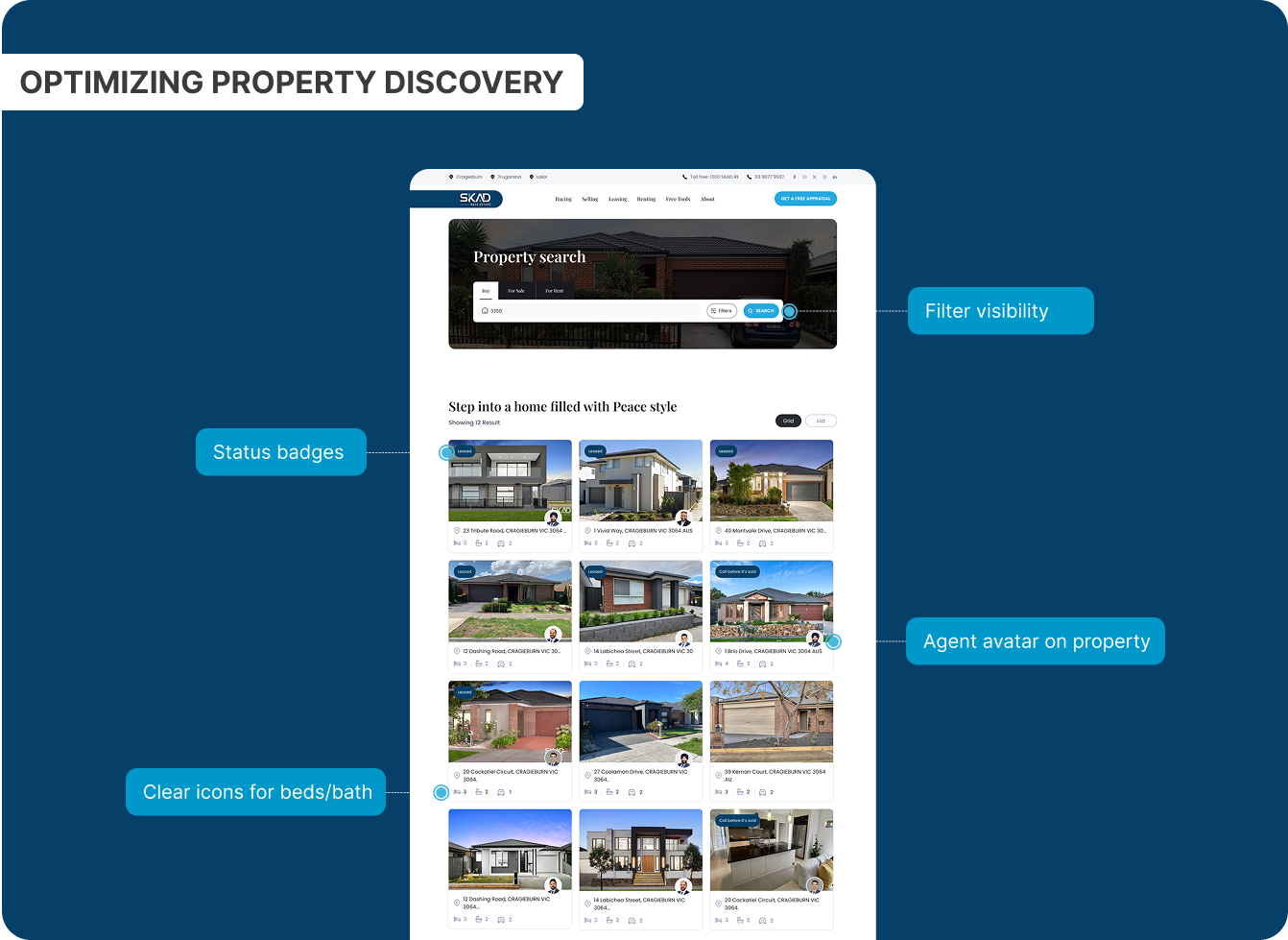
- How property listings are structured
- How competitors build trust through agent profiles, testimonials, and reviews
- What kind of layout and navigation structure they use
2. User Behavior Insights
While studying the market and analyzing user behavior, a few important patterns became clear. Most users decide very
quickly whether they want to stay on a website or leave. If they cannot find what they need within a few seconds, they usually
exit the site.
Key observations
- Users decide whether to stay on a website within 5–8 seconds
- Most visitors expect to search properties immediately when they land on the site
- Clear agent profiles increase user trust and confidence
- A confusing layout can increase the bounce rate
- A large portion of users browse property websites on mobile devices
3. Key Findings
After combining competitor research and user behavior insights, I identified a few important design principles that guided the
redesign.
The most important findings were
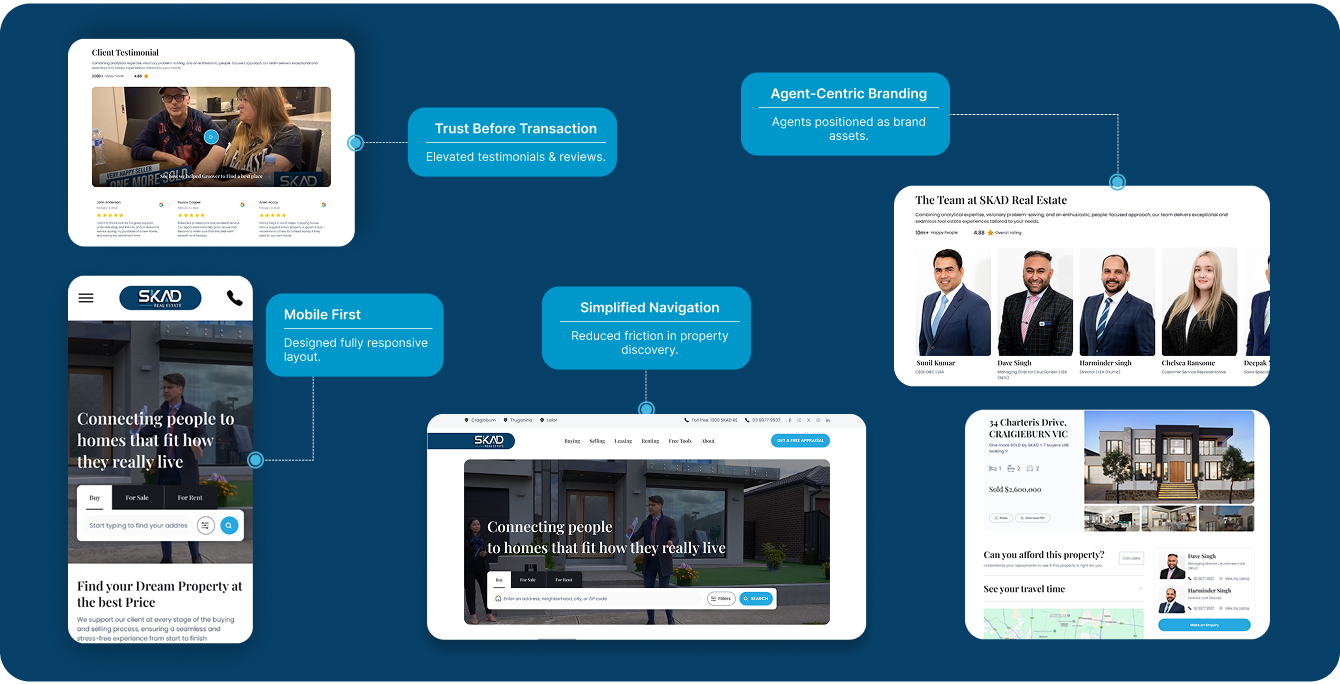
- The website must be mobile-friendly, since many. users browse properties on their phones
- Trust elements like agent profiles, reviews, and testimonials should be clearly visible
- A simple and clear page structure helps users find information faster
- Showing agents prominently increases user confidence and improves inquiry chances
Strategic UX Approach
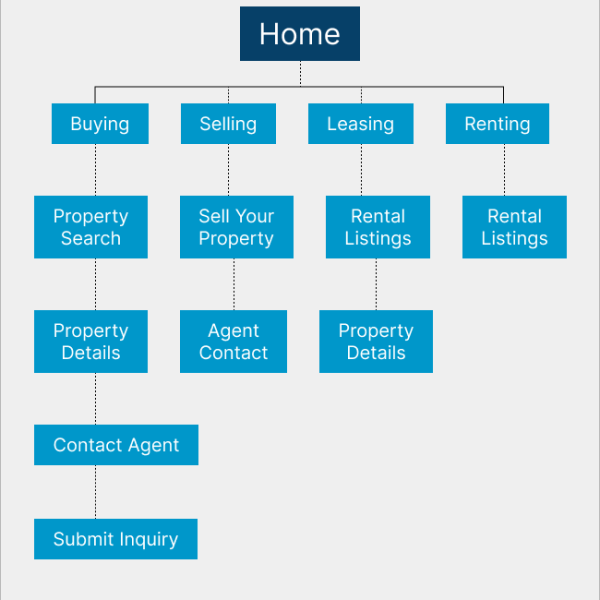
Rebuilding the Information Architecture
To improve usability and reduce confusion, I restructured the website’s navigation and content hierarchy.
The goal was to make property discovery easier, highlight agents more clearly, and guide users quickly toward inquiry actions.
The new structure focuses on clear navigation, faster property search, and better trust-building elements.
Sitemap Structure (Main IA Diagram)
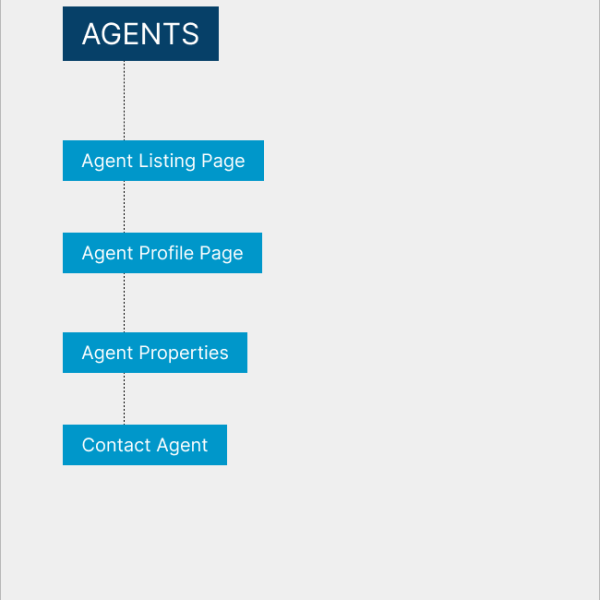
Agents Section
The new information architecture simplifies property discovery and ensures users can quickly move from browsing to
contacting an agent.
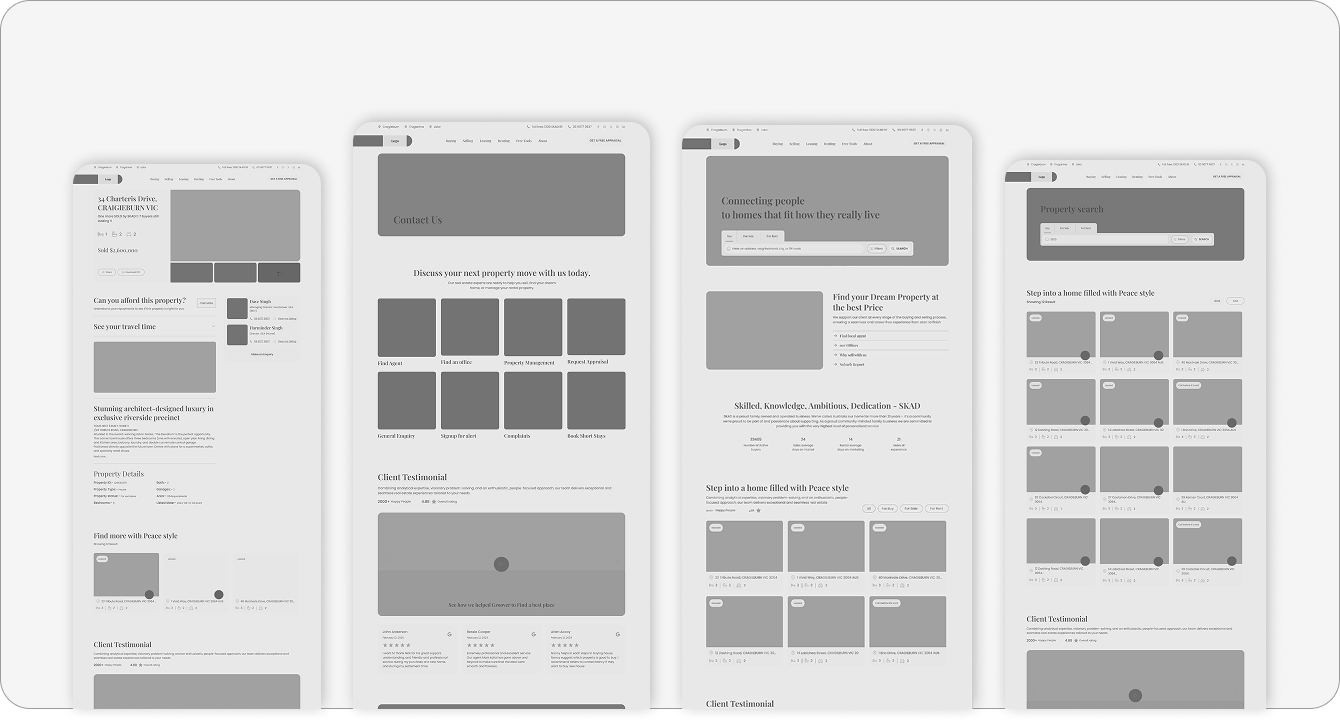
Wireframes & Layout Exploration
Before starting the final UI design, I created low-fidelity wireframes to define the structure of the website. The goal at this stage
was to focus onlayout clarity, content hierarchy, and the placement of key elements such as property search, call-to-action
buttons, and agent information.
I discussed these wireframes with the client and refined them through multiple iterations to ensure the user journey was
simple and effective. Finalizing the wireframe first helped make the UI design process smoother and more efficient.
These wireframes acted as the foundation for the final design and ensured the UI would be clean, intuitive, and
conversion-focused.
Visual Direction & Design Consistency
Before moving into the final UI design, I defined a clear visual direction inspired by modern real estate platforms. The goal was to
create a clean, trustworthy, and professional look that aligns with the expectations of property buyers.
A simple design system was also followed to maintain consistency across the website, including typography, color usage,
spacing, and reusable UI components. This helped ensure the interface remained visually consistent and easy to scale across
different pages.
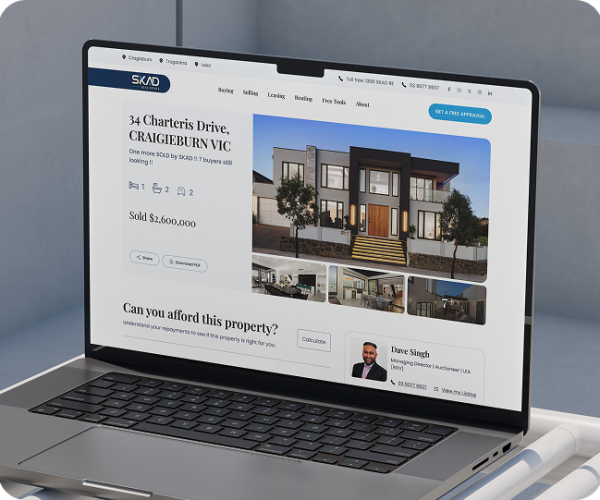
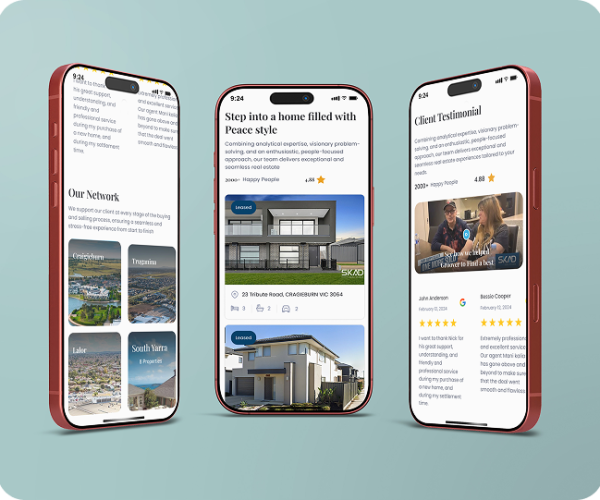
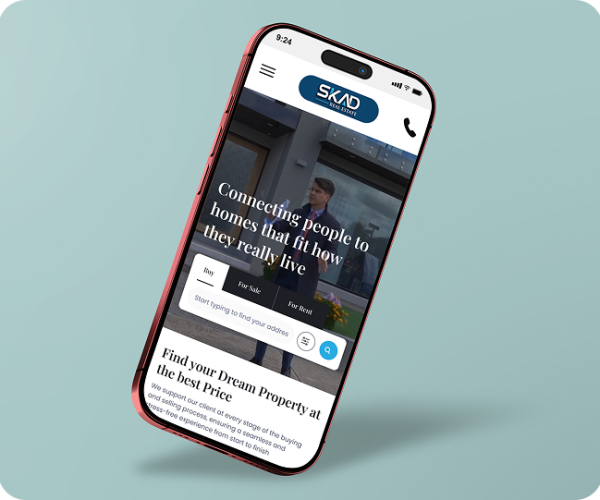
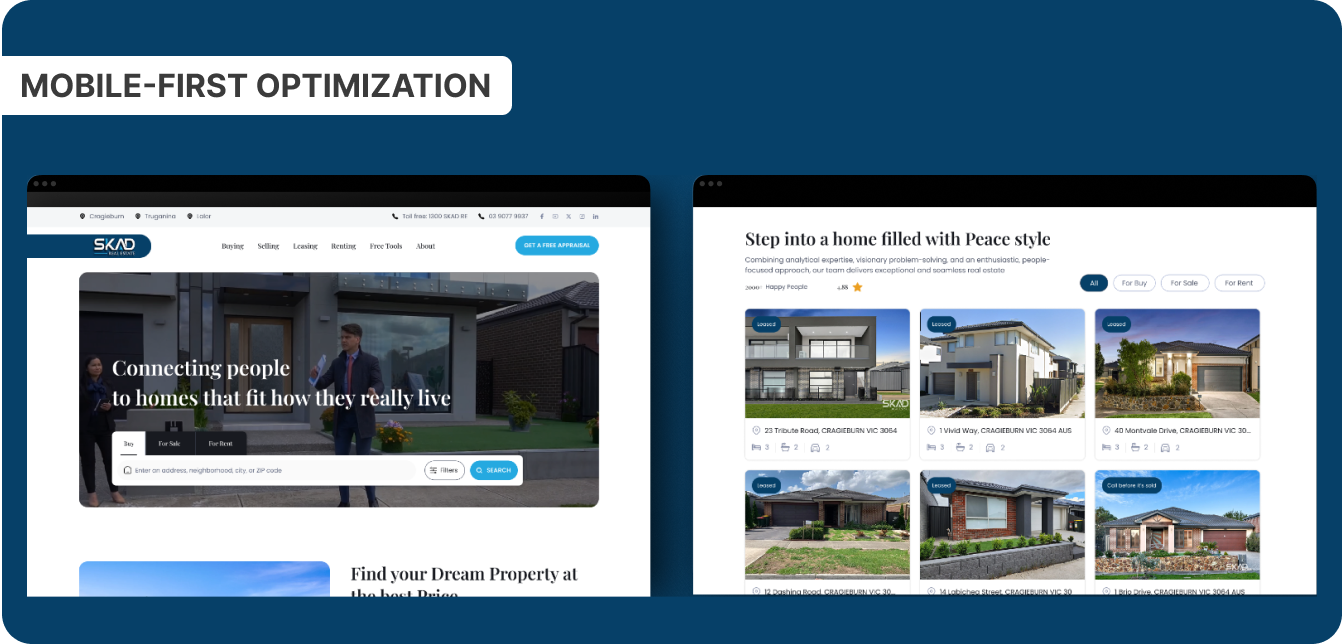
FINAL UI